25 Synonyms for Sad: Better Words for Feelings
Sad is a short word with a wide reach. It can describe a bad day, a lost friend, a moving film, or a poor result. That range is also its weakness. It tells us the feeling is negative, but not how deep it is, or what caused it.
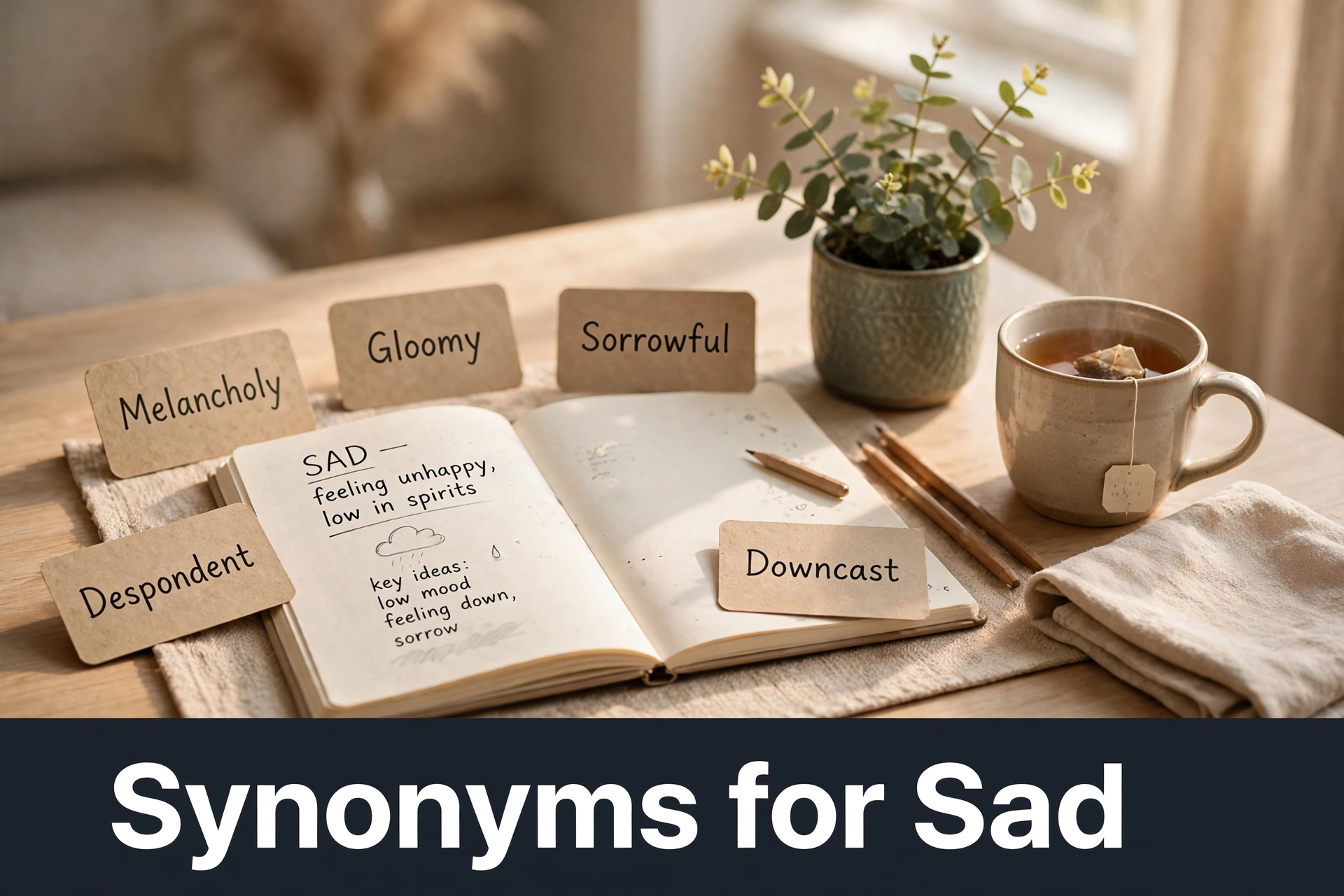
This guide gives you 25 synonyms for sad, grouped by meaning. You will learn which words fit a low mood, deep grief, an unfortunate event, and a poor result, so you can choose with care and kindness. Each word comes with a short note and a real example.
Quick Answer
For a low mood, use unhappy or gloomy. For deep grief, use heartbroken or devastated. For an event that causes sadness, use tragic or heartbreaking. For a poor result, use regrettable or pitiful, with care. The best choice depends on the cause and the strength of the feeling. These synonyms for sad cover low moods, grief, events, and results.
What Does Sad Mean?
Sad is mainly an adjective. It describes a feeling, a cause, or a quality, and the exact sense changes with context:
- Feeling unhappy: A sad person feels low, hurt, or down.
- Causing sadness: A sad film or sad news makes others feel unhappy.
- Unfortunate or regrettable: A sad result is one we wish had been better.
- Poor or inadequate: A sad effort is weak, as in “a sad attempt.” This use can sound harsh, so use it with care.
Sad also gives us the noun sadness, as in “the sadness in her voice.” Most searches for synonyms for sad, though, are for a sharper adjective.
You can compare these senses in the Merriam-Webster thesaurus entry for sad.
Synonyms for Feeling Unhappy
Use these synonyms for sad for a general, everyday feeling of sadness.
- Unhappy: The closest plain synonym for sad. It means not happy, without saying why. Example: She felt unhappy after the move to a new town.
- Miserable: Stronger than unhappy. It means very unhappy and often worn down by it. Example: He felt miserable all weekend with a bad cold and no sleep.
- Sorrowful: A more formal word for full of sorrow, often after a loss. Example: The sorrowful crowd stood in silence at the memorial.
- Glum: Means sad and quiet, often with a low, gloomy look. Example: The team looked glum after the loss.
- Downcast: Means sad with eyes or spirits lowered, often after disappointment. Example: She left the interview feeling downcast.
Synonyms for Deep Grief and Loss
Use these synonyms for sad only when the sadness is deep, often after loss or a major blow.
- Heartbroken: Means overwhelmed with sadness, most often after loss or a breakup. Example: He was heartbroken when his grandmother died.
- Devastated: Means shocked and deeply hurt, as if something has been broken apart. Example: The family was devastated by the fire.
- Despondent: A formal word for very low in spirits, with little hope left. Example: After another rejection, he felt despondent about finding work.
- Grief-stricken: Means overcome by grief, often used in news and formal writing. Example: Grief-stricken parents thanked neighbors for their support.
- Inconsolable: Means unable to be comforted at that moment. It describes the depth, not just the feeling. Example: The child was inconsolable after losing her dog.
Synonyms for a Softer, Low Mood
Use these synonyms for sad when the sadness is mild, quiet, or passing.
- Down: Casual and common for a low mood. It is softer than miserable. Example: I felt a bit down after the rainy weekend.
- Blue: Informal for sad, often used in songs and casual speech. Example: That old song always makes me feel blue.
- Low: Means low in spirits, as in “feeling low.” It is plain and gentle. Example: She has been feeling low since the exam.
- Gloomy: Means dark and sad in mood or outlook, and it can also describe weather. Example: He had a gloomy view of the week ahead.
- Melancholy: A literary word for a deep, quiet, thoughtful sadness. It is not slang. Example: The old photo gave her a melancholy feeling.
Synonyms for Events That Cause Sadness
Use these synonyms for sad when sad describes the event or story, not the person feeling it.
- Tragic: Means causing great sadness, often through death or disaster. Example: The film tells a tragic story of a family torn apart by war.
- Heartbreaking: Means causing intense sadness in the person who hears or sees it. Note the difference: heartbroken feels it, heartbreaking causes it. Example: It was heartbreaking to hear the children’s stories.
- Depressing: Means making people feel sad and low, often over time. Example: The long, grey winter felt depressing.
- Unfortunate: Means unlucky and regrettable, but softer than tragic. Example: It was unfortunate that the concert was cancelled.
- Regrettable: Means something we wish had not happened. It is formal and calm. Example: The delay was regrettable, and the team apologized.
Synonyms for a Poor or Regrettable Result — Use With Care
In this sense, synonyms for sad do not mean a feeling. They mean poor, weak, or worthy of pity, and they can sound insulting.
- Pathetic: Means arousing pity, often mixed with scorn for inadequacy. Avoid it for a person who is hurting. Example: The old bike was in a pathetic state after years in the rain.
- Pitiful: Means deserving pity, often because something is small, weak, or inadequate. Example: The team made a pitiful attempt at a comeback.
- Sorry: In phrases like “a sorry sight,” it means poor or regrettable, not apologetic. Example: The garden was a sorry sight after the storm.
- Lamentable: A formal word for regrettable and worthy of lament. Example: The loss of the library was lamentable for the whole town.
- Deplorable: Means shockingly bad and deserving strong disapproval. Use it for conditions or conduct, not for a feeling. Example: The workers lived in deplorable conditions.
How to Choose the Right Word
Ask three short questions before you replace sad with synonyms for sad:
- Who or what is sad? A person feeling it, an event causing it, or a poor result?
- How strong is it? A passing low mood, a deep grief, or a formal regret?
- Who will read it? A friend, a teacher, or a formal reader?
| Situation | Better choice | Why it works |
|---|---|---|
| A friend had a bad day | unhappy | It is plain, kind, and not too strong. |
| A loss in the family | heartbroken | It matches the depth of grief. |
| A film that moves viewers to tears | heartbreaking | It shows the film causes the feeling. |
| A cancelled plan | unfortunate | It is regrettable, but not tragic. |
If you are unsure, choose the gentler word. Unhappy is safer than devastated for a bad day, and unfortunate is safer than tragic for a small setback.
Sentence Examples
These before-and-after examples show how synonyms for sad make the meaning sharper:
- Before: She felt sad after the move. After: She felt unhappy after the move. The change is plain and clear, with no extra drama.
- Before: He was sad when his dog died. After: He was heartbroken when his dog died. The change matches a deep loss.
- Before: It was a sad film. After: It was a heartbreaking film. The change shows the film caused the sadness.
- Before: The news was sad. After: The news was tragic. The change raises the event to a serious, shocking level.
- Before: The garden looked sad. After: The garden was a sorry sight. The change uses the “poor result” sense, not a feeling.
Grammar and Common Mistakes
- Sad vs. sadly: Sad is an adjective. Sadly is an adverb. Say “She looks sad,” not “She looks sadly.” Say “She smiled sadly” for how she smiled.
- Sad about vs. sad for: Use sad about for an event, as in “sad about the news.” Use sad for for sympathy toward a person, as in “I feel sad for her.”
- Sad vs. depressed: Depressed can describe a serious mental health condition, not just a bad day. Do not use it as a casual synonym for sad when someone may need support. If you are writing about health, use careful, respectful language and seek trusted sources.
- Feeling vs. causing: Do not mix heartbroken and heartbreaking. A person is heartbroken. A story is heartbreaking.
- Sad as a noun: Sad itself is not a noun. Use sadness, as in “the sadness in his eyes,” not “the sad in his eyes.”
For the full dictionary senses, see the Cambridge Dictionary entry for sad.
Frequently Asked Questions
What is the best synonym for sad in an essay?
It depends on your point. For a feeling, use unhappy or sorrowful as synonyms for sad. For grief, use heartbroken. For an event, use tragic or unfortunate. Match the word to your evidence, not just to a stronger word.
Is depressed a synonym for sad?
Only with care. Depressed can mean very unhappy, but it also names a health condition. In casual writing about a bad day, unhappy or low is kinder and clearer. In health writing, use precise, respectful terms.
What is the difference between unhappy and miserable?
Unhappy is general and mild to moderate. Miserable is stronger and suggests being worn down by the feeling. If the person is still coping, unhappy fits. If the feeling dominates the day, miserable fits better.
Can sad describe a movie or a song?
Yes. In that use, sad means it causes sadness. Heartbreaking and tragic are often clearer for a moving story, while depressing fits something that leaves viewers feeling low.
What is a formal synonym for sad?
Sorrowful and melancholy suit formal and literary writing about feelings. Lamentable and regrettable suit formal writing about events and results. Despondent is formal, but it means hope is nearly gone.
Words to Explore Next
- synonyms for emotional
- synonyms for anger
- synonyms for confused
Conclusion
Sad covers many feelings, from a low mood to deep grief, and from an unfortunate event to a poor result. When you name the cause and the strength, your writing becomes kinder and clearer at once. Start with unhappy, gloomy, heartbroken, or tragic, and save the strongest words for moments that truly earn them. Choosing synonyms for sad carefully keeps your writing honest and kind.
For more words in this group, explore the Feelings & Emotions Synonyms category.